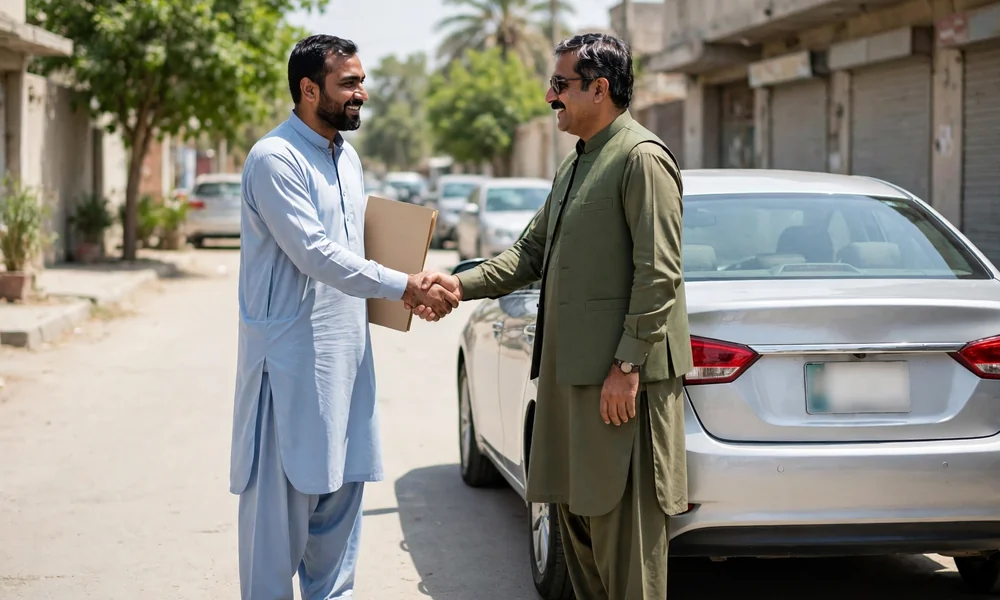
A Punjab vehicle is not legally sold when the money changes hands or when the buyer drives it away. It is sold when the Excise record moves to the name of the buyer, and in the modern system that move is driven by biometrics. This guide sets out the complete transfer process: the documents to prepare, the sequence from application to new smart card, and the costs that can and cannot be stated in advance. It follows naturally from MTMIS Punjab: the complete guide to online vehicle verification, because every sound transfer begins with a verification check.
Table of contents
- Before anything is signed: the checks that come first
- Documents to prepare
- The transfer process, step by step
- Fees and taxes: what can be stated honestly
- After approval: the new smart card
- The open letter trap
- Frequently asked questions
Before anything is signed: the checks that come first
The transfer system assumes a clean record, and it prices a dirty one into the transaction. Before the application begins, run the verification check on the vehicle and read the result with the seller present. The owner name must match the CNIC of the seller; if it does not, the person in front of you cannot transfer the vehicle, and the deal must pause until the earlier pending transfer is completed.
Read the token tax position next. Outstanding token tax is calculated into the amount payable at transfer, so arrears discovered at that stage are arrears the buyer funds. Agree in advance, and record in the sale agreement, whether the seller clears the dues first or the price falls by the amount shown. How to check token tax online in Punjab shows how to price the dues exactly.
Documents to prepare
A standard private transfer is built on the following documents.
- The original smart card or registration book of the vehicle.
- The CNIC of the seller, who must be the registered owner shown in the record.
- The CNIC of the buyer, in whose name the new record will stand.
- A sale agreement or affidavit recording the parties, the vehicle and the price.
- For vehicles under a bank lease or hire purchase, the clearance from the financing institution, because the record carries the lien until it is formally terminated.
Confirm the live list on the official portal before attending anywhere, since document requirements are set by notification and change over time.
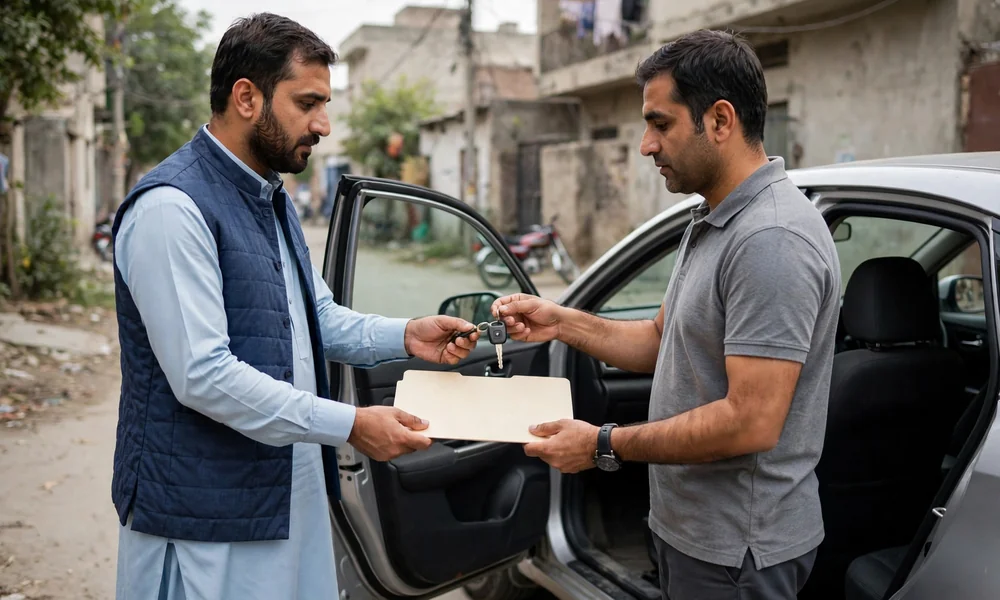
The transfer process, step by step
- Start the application. The buyer initiates the transfer in the ePay Punjab application or through the Excise online services, entering the registration number and the details of both parties.
- Review the calculated amount. The system calculates the transfer fee together with any outstanding token tax and presents one payable figure.
- Generate and pay the PSID. The system issues a 17-digit PSID for the transfer liability. Pay it through a bank application, an ATM or a mobile wallet within its validity window, following the same discipline set out in how to pay token tax online with ePay Punjab.
- Watch the bio-pending status. After payment, the vehicle record shows a bio-pending position.
- Complete biometrics on both sides. The seller and the buyer each complete biometric verification, either through the NADRA Pak ID application on a phone or at a facilitation centre.
- Department approval. Once biometrics clear, the department approves the transfer and the record moves to the name of the buyer.
- New smart card. A fresh smart card is printed for the buyer and delivered by post, with the free e-registration card available for use in the meantime.
Both parties should complete their biometrics promptly while the transaction is fresh. A half-finished transfer, paid but not biometrically cleared, is the most common source of the stuck cases described below.
Fees and taxes: what can be stated honestly
The transfer fee is set by the provincial schedule and varies with the vehicle, principally by engine capacity and vehicle type, and the payable figure at transfer also absorbs any outstanding token tax. Published tables disagree with each other, so no figure printed here would deserve your trust. The honest source is the system itself: the ePay calculation at application shows the exact amount for the exact vehicle before any money moves, so check it before the sale price is finalised.
After approval: the new smart card
Approval moves the record at once, but the physical card follows by post after central printing, and delivery timelines vary with printing and postal load. Track the application through the portal tracking service, use the free e-registration card as proof of registration while the card travels, and collect the card from the MRA office if a delivery attempt returns it. The card, its security features and the tracking process are covered in the guide to the vehicle registration smart card in Punjab.
The open letter trap
An open letter is an informal handover in which the buyer takes the vehicle and its documents while the record stays in the name of the seller, on a promise to transfer later. It remains common in informal dealing and it is the root of a large share of ownership disputes. While the letter stands open, fines, e-challans and criminal misuse of the vehicle point at the registered owner, and the buyer holds a vehicle that cannot be cleanly resold. The biometric system exists precisely to end this pattern, and no discount justifies leaving the record behind.
Frequently asked questions
Can a vehicle be transferred if the seller is not the registered owner?
No. Only the registered owner shown in the MTMIS record, or the legal heirs of a deceased owner acting with documents, can complete a transfer. If the record stands in an earlier name, that pending transfer must be resolved first, which is why the verification check comes before any payment in a sound deal.
What happens if one party does not complete biometrics?
The transfer remains in bio-pending status and does not complete, even though the fee stands paid. The record continues to show the seller as owner, with all the exposure that carries. Both parties should agree a day for biometrics before the application is started, and complete the step through the NADRA Pak ID application or a facilitation centre without delay.
How much does a vehicle transfer cost in Punjab?
The fee follows the provincial schedule and varies mainly with engine capacity and vehicle type, and outstanding token tax is added to the payable amount at transfer. Published tables disagree, so rely on the figure the ePay system calculates for the specific vehicle at application. That amount is shown before payment and is the number to negotiate around.
Does the buyer receive a new smart card after transfer?
Yes. Approval of the transfer triggers printing of a fresh smart card in the name of the buyer, delivered by post after central printing. The free e-registration card serves as proof of registration while the physical card is in transit.
Can a vehicle with outstanding token tax be transferred?
The transfer calculation includes the outstanding tax, so the dues are settled as part of the payable amount rather than blocking the process outright. The practical question is who funds them. Settle that in the sale agreement before the application begins, using the online dues check to fix the exact figure.