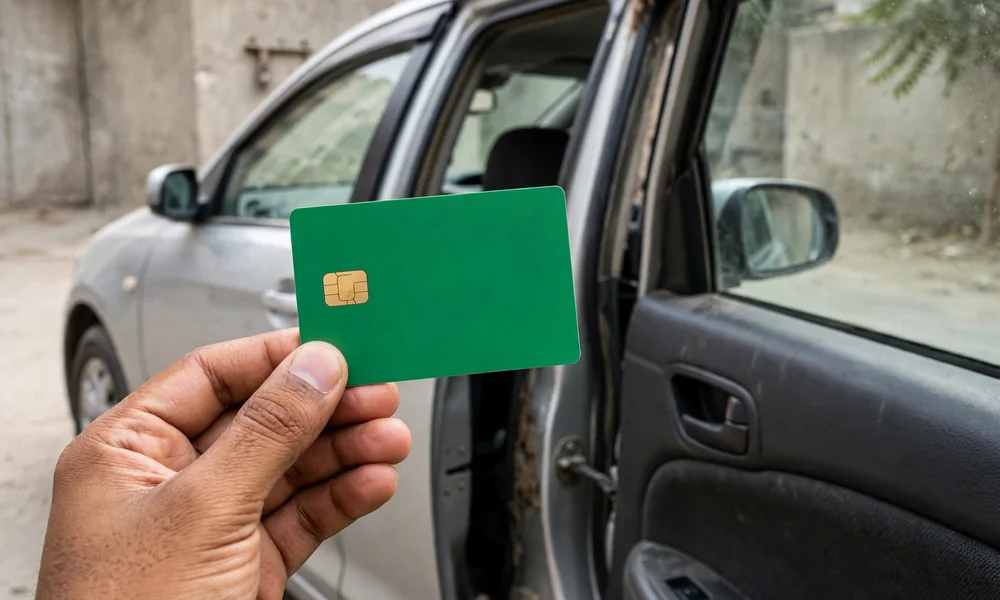
The paper registration book that Punjab vehicles carried for decades has been replaced by a chip-based smart card: a wallet-sized card that holds the registration and owner details of the vehicle in printed and electronic form. It is now the document a buyer asks to see, and the document the verification form asks you to read the registration date from. This guide explains what the card is and what it carries, how it is issued at registration and after transfer, how to track it while it travels, and what to do when it is lost. It belongs to the registration story told in MTMIS Punjab: the complete guide to online vehicle verification.
Table of contents
- What the smart card is
- What the card shows
- How the card is issued
- Tracking the card and the application
- The e-registration card: proof while you wait
- If the card is lost
- The card fee: what can be stated honestly
- Frequently asked questions
What the smart card is
The smart card is the registration certificate of the vehicle in its modern form. Where the old system issued a paper book that lived in the vehicle and deteriorated with it, the card is printed centrally on secure stock with an embedded chip, and it is issued in the name of the registered owner recorded in MTMIS. One card exists per vehicle record, and it is reissued when the material facts change, most importantly when the vehicle is transferred.
Because the card is drawn from the same database as the online record, the two should always agree. A card that differs from the verification result in any printed field is a discrepancy to raise with the department, not a detail to overlook.
What the card shows
The printed face of the card carries the particulars a roadside or purchase inspection needs, including the registration number, the owner name, the make and model of the vehicle, the engine and chassis numbers, and the registration date. The current online verification form asks for that registration date as one of its three inputs, so the card is effectively a key to the vehicle record. How to verify a vehicle online on MTMIS Punjab, step by step shows where the date is used, and the chip carries the electronic copy of the record for department readers.
How the card is issued
The card is produced by an event, not requested as a separate product in the ordinary course. At the first registration of a vehicle, the process described in how to register a new vehicle in Punjab ends with the allotment of the number and the creation of the record, and the card is then printed centrally and dispatched by post to the address of the owner. After a transfer, the approval described in how to transfer vehicle ownership in Punjab triggers printing of a fresh card in the name of the buyer, which travels by the same route. A card sent to an old or incomplete address begins a return journey that ends at the MRA office, from where it must be collected in person, so the postal address given at application deserves care.
Tracking the card and the application
The portal carries an application tracking service, and the tracking or receipt reference issued at application is the key to it. Tracking shows where the case stands: under process, printed, dispatched, or returned undelivered. A separate return shipment tracking view covers cards that the postal service could not deliver.
Delivery timelines vary with printing and postal load, and published estimates differ, so no number of days should be treated as a promise: track first, and only treat the card as missing when the shown stage has completed. A card shown as returned is not lost at all; it is waiting at the office of the district of registration, where the owner can collect it with the original CNIC and the tracking reference.
The e-registration card: proof while you wait
While the physical card is in printing or in the post, the department provides the e-registration card, a downloadable virtual version of the registration card that serves as proof of registration. It is free of cost from the official channel. Download it as soon as the record exists, and never pay a third party or an agent for the download, because charging for it is a common fraud aimed at new owners.
If the card is lost
A genuinely lost card, including one that tracking shows was delivered, is replaced through a duplicate process at the MRA of the district of registration. Expect the department to require the CNIC of the registered owner, the vehicle particulars and a report of the loss, and expect a fee under the current schedule with a fresh printing and delivery cycle. Requirements and the fee are set by notification and change over time, so confirm the live list on the official portal or through the department helpline on 1035 before attending.
The card fee: what can be stated honestly
A fee applies to the smart card, but published figures in circulation disagree with each other: recent guide sources have printed different amounts for the same card, and schedules change with the provincial budget. This guide therefore prints no single figure as the official fee, because a wrong number stated confidently would be worse than none. The fee assessed in a live case is shown in the challan generated at registration, transfer or duplicate application, and that figure governs.
Frequently asked questions
Is the smart card the same as the old registration book?
It serves the same legal purpose as the registration certificate but in a modern centralised form, printed from the MTMIS record with the particulars on its face and an electronic copy in its chip. A card and the online record are drawn from the same database and should always match.
How long does the smart card take to arrive?
Timelines vary with printing and postal load, and published estimates are inconsistent, ranging from about two weeks to a month. The tracking service on the portal is the reliable source for a specific case. Use the free e-registration card as proof of registration while the physical card travels.
Why does the online verification form ask for a date from the card?
The current form asks for the registration number, the registration date and a security code, so that casual browsing of the database is limited to people holding the vehicle documents. The registration date is printed on the smart card and in the registration book.
The tracking shows the card was returned. What should be done?
A returned card is held at the MRA office of the district of registration after the postal service could not deliver it. The owner can collect it in person with the original CNIC and the tracking or receipt reference. Check the return shipment tracking view on the portal first so the visit is made to the right office.
How much is the smart card fee in Punjab?
A fee applies, but published figures from guide sources conflict with each other and schedules change with the budget, so no outside figure should be treated as official. The amount assessed in a live case appears in the challan for the application. Confirm the current figure on the official portal before making any payment.