Dealer Vehicle Registration System: how dealers register vehicles in Punjab
A licensed dealer in Punjab registers a sold vehicle inside the showroom under the Dealer Vehicle Registration System (DVRS) and hands the buyer the registration number and the authorized number plates at delivery. The buyer pays the standard government dues and a dealer service charge. The Punjab Excise and Taxation Department runs the system with support from the Punjab Information Technology Board, and the department publishes the list of authorized dealers for buyer confirmation. This guide states the showroom sequence, the dues, the service charge figures in reports, and the delivery checks.
Table of contents
- What the Dealer Vehicle Registration System does
- How registration inside the showroom works
- Government dues under the system
- The dealer service charge on the invoice
- How to confirm an authorized dealer before purchase
- What the buyer receives and checks at delivery
- Dealer registration and self-registration compared
- Frequently asked questions
What the Dealer Vehicle Registration System does
The Dealer Vehicle Registration System is the Excise platform for registration at the point of sale. A licensed dealer registers a sold vehicle inside the showroom under the system, and the dealer issues the authorized number plates at delivery. The Punjab Information Technology Board supported the build of the platform, and the platform links the dealer, the bank channel and the department record.
The department stated three aims at the launch of the system. The system ends the applied-for period on the road, because the vehicle leaves with a registration number and plates. The system reduces late registration, because the dealer completes registration at delivery. The system removes unregistered agents from the process, because a dealer with a DVRS license alone holds the authority for showroom registration.
How registration inside the showroom works
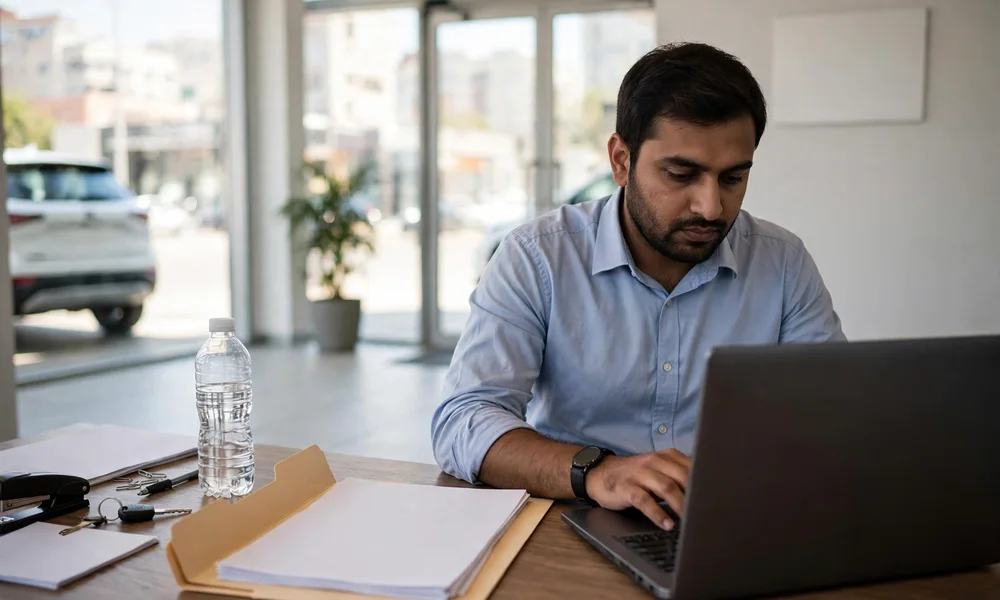
The dealer completes the registration in a fixed order, and the buyer observes each stage at the desk.
- Record the sale on the dealer invoice with the name and CNIC details of the buyer.
- Calculate the government dues for the vehicle under the standard schedule.
- Deposit the registration fee and the number plate fee through the linked bank channel.
- Enter the registration in the department system and receive the registration number.
- Issue the authorized number plates and fit the plates to the vehicle.
- Hand the buyer the payment receipts and the delivery documents.
At launch, the system interfaced with the National Bank of Pakistan and the department, and the design produced automated receipts to the customer for the deposits. The receipt set proves the payment of dues, and the buyer holds the receipt set with the invoice after delivery.
Current policy strengthens the launch design. News reports from July 2026 by TechJuice and PakWheels record a direction from the Director General Excise: a new vehicle stands registered before delivery, and the vehicle does not leave the showroom unregistered. Manufacturers provide lists of authorized dealerships to the motor registration branches, and the department issues DVRS licenses against those lists. The arrangement covers buyers with a Punjab CNIC, and reports place 102 DVRS licenses as active across Punjab at the time of the reports.
Government dues under the system
DVRS changes the place and the agent of registration, and DVRS changes no government rate. The buyer pays the standard registration fee, the token tax position for the vehicle and the smart card fee of Rs 1,300. The table below states the registration fee schedule and the related dues from the official schedule.
| Vehicle and head | Registration fee or due |
|---|---|
| Motorcycle up to 70cc | Rs 1,000 |
| Motorcycle from 71cc to 100cc | Rs 1,500 |
| Motorcycle from 101cc to 125cc | Rs 2,000 |
| Motorcycle from 126cc to 150cc | Rs 2,500 |
| Motorcycle above 150cc | 2% of value |
| Car up to 1000cc | 1% of value |
| Car from 1001cc to 2000cc | 2% of value |
| Car above 2000cc | 4% of value |
| Token tax, motorcycle | Rs 1,500 lifetime |
| Token tax, car up to 1000cc | Rs 20,000 lifetime |
| Token tax, car from 1001cc to 2000cc | 0.3% of invoice price per year |
| Token tax, car above 2000cc | 0.4% of invoice price per year |
| Smart card, motorcycle, car, HTV and rickshaw | Rs 1,300 |
A buyer reads each dues line on the dealer invoice against the schedule in the table. A line outside the schedule requires an explanation from the dealer before payment.
Vehicle registration smart card in Punjab explains the card and the delivery route after registration.
The dealer service charge on the invoice
The dealer service charge stands separate from government dues. Government dues flow to the department through the bank channel. The service charge rewards the dealer for the registration work. Reports carry two figures for the charge, and a buyer reads both figures with attribution.
Launch-era reports and long-standing reports state a dealer service charge of Rs 2,000 per vehicle. Reports from July 2026 state a raised charge: Rs 1,000 for a motorcycle registration and Rs 4,000 for a car registration. The two report sets describe two periods. A buyer asks the dealer to print the service charge as a separate line on the dealer invoice, and the buyer holds the invoice after delivery.
How to confirm an authorized dealer before purchase
The department publishes the authorized dealer list on the DVRS page at excise.punjab.gov.pk. The list arranges dealers by district and by category, and the categories cover motor cars, motorcycles and commercial vehicles. A buyer confirms the dealer on that list before purchase.
- Find the district of the showroom in the list on the DVRS page.
- Find the category of the vehicle, motor car, motorcycle or commercial vehicle.
- Match the dealer name and the showroom against the entry in the list.
- Record the confirmation before payment of any amount to the dealer.
The list is the test of authority. A seller with an entry registers the vehicle under DVRS at delivery, and a seller without an entry holds no DVRS authority. In particular, a buyer treats a promise of showroom registration from an unlisted seller as an unproven claim.
What the buyer receives and checks at delivery
Delivery under DVRS hands the buyer a complete set. The buyer receives the registration number, the authorized number plates on the vehicle, the payment receipts for the dues and the registration record in the department system. The smart card follows by post in the standard way, and the card arrives after delivery rather than at the showroom desk. The buyer holds the invoice and the receipt set from the day of delivery, because the documents prove the sale and the payment of dues.
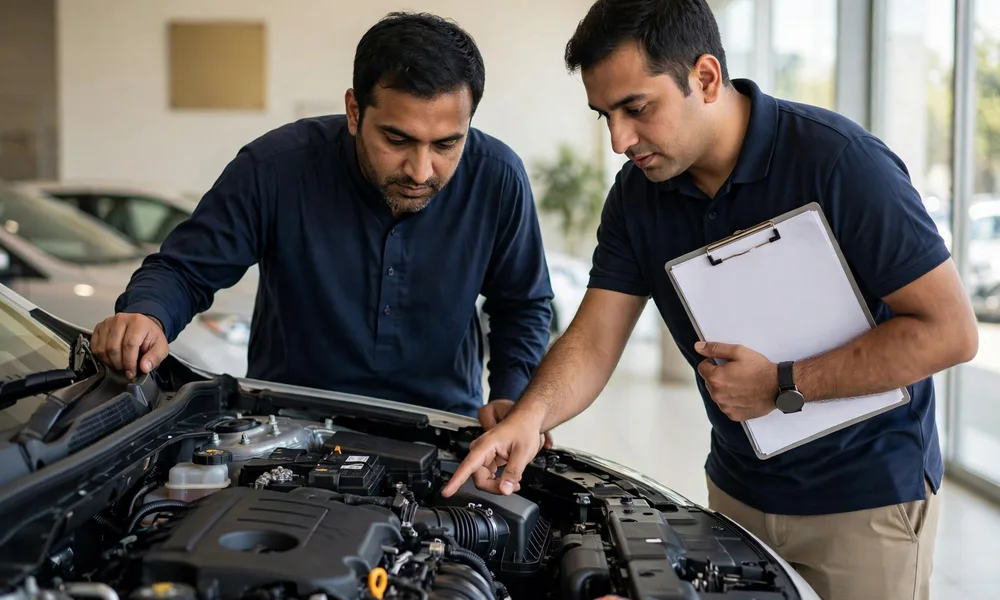
Three checks close the delivery. The buyer confirms the spelling of the name and the CNIC details on the invoice and the record against the CNIC card. The buyer reads the engine number and the chassis number on the paperwork against the numbers on the vehicle. The buyer counts the receipt set and confirms a receipt for each dues line on the invoice. A mismatch at the desk takes minutes to correct, and a mismatch after departure takes a return journey and a counter case.
The buyer completes one further check after delivery. The buyer verifies the record on the official portal at mtmis.excise.punjab.gov.pk with the registration number, the registration date and the security code. The result shows the engine number and the record details, and the result shows no chassis number. SMS verification runs beside the portal: the buyer sends the registration number to 8785 and receives the record by message.
MTMIS Punjab: the complete guide to online vehicle verification explains the verification result, field by field, including the limit on the chassis number.
Dealer registration and self-registration compared
Self-registration at the Motor Registration Authority remains the route where a seller holds no DVRS license. The buyer completes the office process in that case and receives the registration through the counter route. An unlicensed agent is not a DVRS dealer, and the distinction matters at the moment of payment: a DVRS dealer registers the vehicle in the department system at delivery, and an unlicensed agent holds no system access and no plate authority.
By comparison, the two routes charge the same government dues under the same schedule. DVRS saves the buyer the office journey and the applied-for period, and self-registration suits a purchase from a seller outside the dealer network. The authorized dealer list settles the route question before the purchase.
How to register a new vehicle in Punjab states the office route in full, from Form F and inspection to the smart card.
Frequently asked questions
Does the system change government registration rates?
No. DVRS changes the place and the agent of registration, and the system changes no government rate. The buyer pays the standard registration fee, the standard token tax position and the smart card fee of Rs 1,300.
Does the buyer receive number plates at delivery?
Yes. A licensed dealer issues the authorized number plates at delivery under the system, and the vehicle leaves the showroom with the registration number and the plates. July 2026 news reports record the same department direction: a new vehicle stands registered before delivery.
Does the smart card arrive at delivery?
No. The smart card follows by post in the standard way after registration, and delivery at the showroom covers the registration number, the plates and the receipt set. The buyer holds the invoice and the receipts as the proof set during the wait for the card.
Can any agent register a vehicle under the system?
No. A dealer with a DVRS license and an entry on the authorized dealer list on excise.punjab.gov.pk holds the authority for showroom registration. An unlicensed agent is not a DVRS dealer, and a buyer confirms the dealer on the list before purchase.
Does the verification result show the chassis number?
No. The verification result on the official portal shows the engine number and the record details, and the result shows no chassis number. The buyer reads the chassis number on the vehicle and on the paperwork at delivery.
Should the buyer hold the dealer invoice after delivery?
Yes. The buyer should hold the invoice, because the invoice records the sale, the dues lines and the dealer service charge as a separate line. The invoice and the receipt set prove the payment position for any later question.