How to transfer a vehicle when the owner has died (legal heirs)
A vehicle transfer on the death of the owner in Punjab follows a succession route rather than the standard transfer route. A deceased owner cannot complete biometric verification, and the standard route through NADRA Pak ID rests on biometric verification by the seller and the buyer. The Excise office processes a succession transfer manually against legal documents, and the office records a legal heir as the new owner after the heir presents the full document set. This guide gives the order of operations from the death certificate to the new smart card, the document list, and the fee position, inside the wider system described in MTMIS Punjab: the complete guide to online vehicle verification.
Table of contents
- Why the standard biometric route cannot run after a death
- The order of operations at a glance
- The death certificate and the Family Registration Certificate
- The succession certificate and disagreement among heirs
- Dues clearance before the application
- The application at the Motor Registration Authority
- Fees for a succession transfer
- Cautions for families before the transfer completes
- The verification check after the transfer
- Frequently asked questions
Why the standard biometric route cannot run after a death
The standard transfer route requires biometric verification by the registered owner. A deceased owner cannot place a thumb impression, and the NADRA Pak ID system cannot verify a deceased person. As a result, the office cannot run the standard route for a vehicle in the name of a deceased owner. The succession route replaces biometric proof with legal proof. A succession certificate names the legal heirs, and the office reads the right of each heir from the certificate. The office then processes the transfer manually at the Motor Registration Authority. How to transfer vehicle ownership in Punjab gives the standard route for a transfer between living owners, and the contrast shows the point of separation between the two routes.
The order of operations at a glance
The sequence below gives the full order from the first document to the new card.
- The family obtains the death certificate and completes the NADRA record steps for the deceased owner.
- The family obtains the Family Registration Certificate from NADRA.
- The heirs obtain a succession certificate through the NADRA succession route or the civil court.
- The heirs clear any token tax dues on the vehicle.
- The heirs apply at the Motor Registration Authority with the full document set.
- The office records the transfer, and the department issues a new smart card in the name of the heir.
A family follows the sequence in order, because each step produces a document for a later step. The application rests on the succession certificate.

The death certificate and the Family Registration Certificate
The family obtains the death certificate first and completes the NADRA record steps for the deceased owner. The death certificate records the death in the official system, and the record supports every later document. The family then obtains the Family Registration Certificate, known as the FRC, from NADRA. The FRC lists the legal heirs and connects each heir to the deceased owner in one document. An heir presents a CNIC at NADRA, and NADRA issues the FRC against the family record. A family with an error in the family record corrects the record first, because the succession step reads the same data.
The succession certificate and disagreement among heirs
The heirs obtain a succession certificate through the NADRA succession route or the civil court. The certificate names the legal heirs and the shares of the heirs. A published interview with the Director General Excise records the position on the certificate and on disagreement. The interview records that the certificate stands in the names of the children of the deceased, and the interview records that the court decides the holder where the heirs disagree. The certificate gives the Excise office the legal basis for the transfer, and the office does not decide shares or disputes among heirs. A family with a dispute among heirs resolves the dispute through the court route first and then presents the decided certificate at the Excise office.
Dues clearance before the application
The heirs clear any token tax dues on the vehicle before the application. Arrears stand on the record of the vehicle rather than on a person, and a record with arrears carries the arrears into the transfer. The heirs read the dues position on ePay Punjab on epay.punjab.gov.pk, generate a challan, and pay the amount against the 17-digit PSID through a bank application, an ATM or a mobile wallet. The heirs keep the paid receipt with the transfer file. A clean dues position removes one ground for delay at the office, and the office checks the position on the record during the application.
The application at the Motor Registration Authority
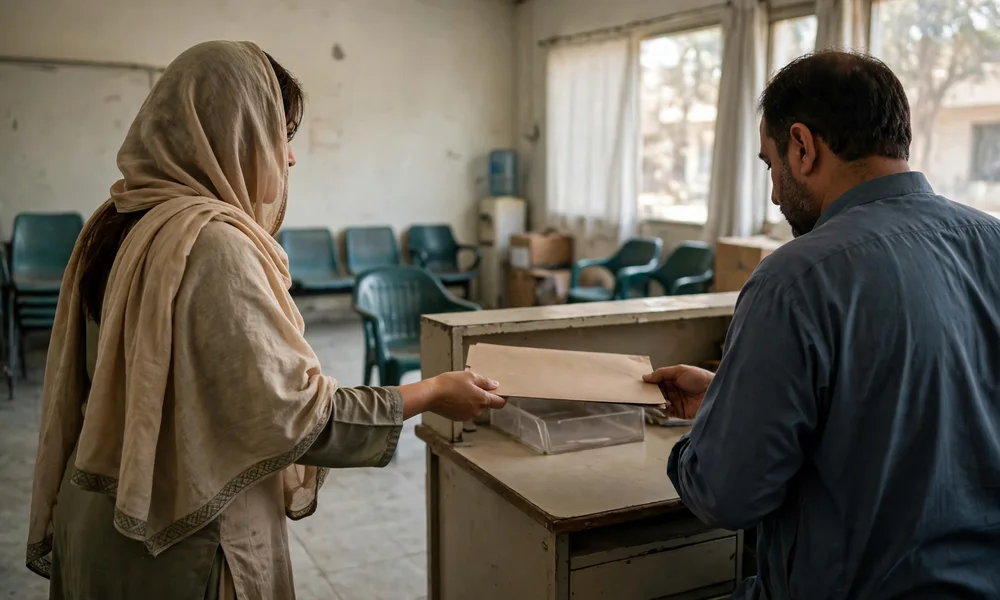
The heirs apply at the Motor Registration Authority with the full document set. The table below lists each document for the application file.
| Document | Purpose in the file |
|---|---|
| Succession certificate | Names the legal heirs and the shares |
| Copy of the death certificate | Records the death of the registered owner |
| Family Registration Certificate | Lists the legal heirs in the NADRA family record |
| CNIC copies of the heirs | Proves the identity of each heir |
| Original registration book or smart card | Proves the current registration of the vehicle |
| Complete vehicle file | Gives the office the full record of the vehicle |
| Transfer order form | Carries the formal transfer application |
Consent of the other heirs supports a transfer into the name of one heir where the certificate and the office require consent. Families treat consent as office practice for a single name transfer, and the office confirms the requirement at the counter in each case. Documents required for vehicle transfer in Punjab lists the document set for a standard transfer, and a succession file adds the death certificate, the FRC and the succession certificate to the standard set. The office records the transfer after the file check, and the department issues a new smart card in the name of the heir.
Fees for a succession transfer
No special succession transfer fee stands published. The standard transfer fee schedule applies. The table below shows the standard transfer fee for each category.
| Vehicle category | Transfer fee |
|---|---|
| Motorcycle | Rs 910 |
| Car up to 1000cc | Rs 4,540 |
| Car from 1001cc to 1800cc | Rs 9,075 |
| Car above 1800cc | Rs 18,150 |
A transfer within 10 years of registration carries the lifetime token charge again. The charge stands at Rs 1,500 for a motorcycle and Rs 20,000 for a car up to 1000cc, and the charge reduces by 10 percent for each financial year passed. The smart card fee for the new card stands at Rs 1,300. An heir reads the exact total for the vehicle on the challan at the office, because the total combines the transfer fee, any lifetime token charge and the smart card fee for the case.
Cautions for families before the transfer completes
A family should not sell the vehicle to an outside buyer before the succession transfer. A buyer cannot complete a transfer from a deceased owner, because the record still names the deceased owner and the standard route requires verification by the owner. The succession transfer places an heir on the record first, and an heir on the record can then run a normal sale transfer at a later date. Possession and family use do not change the registered owner on the record. A family in daily use of the vehicle still holds a record in the name of the deceased owner until the office records the succession transfer. The heirs keep the original succession certificate safe, because the office file and any later sale rest on the certificate. The heirs also complete the transfer early, before token tax arrears build on the record and add cost to the file.
The verification check after the transfer
The heir checks the updated record after the office records the transfer and issues the new smart card. The verification form on mtmis.excise.punjab.gov.pk asks for the registration number, the registration date and a security code. The result shows the name of the new owner and the engine number. The result does not show the chassis number, and an heir compares the engine number with the number on the vehicle file. An heir also sends the registration number by SMS to 8785. A result in the name of the heir confirms the transfer. An heir with a question reaches the Excise helpline on 1035 or the PITB helpline on 0800-08786.
Frequently asked questions
Does a succession transfer require biometric verification by the deceased owner?
No. A deceased owner cannot complete biometric verification. The Excise office processes a succession transfer manually against the succession certificate and the other legal documents in the file.
Does a family need a succession certificate for the transfer?
Yes. The succession certificate names the legal heirs and the shares, and the certificate gives the office the legal basis for the transfer. The heirs obtain the certificate through the NADRA succession route or the civil court.
Does a special succession transfer fee apply?
No. No special succession transfer fee stands published, and the standard transfer fee schedule applies. The schedule stands at Rs 910 for a motorcycle and Rs 4,540, Rs 9,075 and Rs 18,150 for cars by engine capacity band.
Does the vehicle pass to one heir alone?
Yes. The transfer can place the vehicle in the name of one heir, and consent of the other heirs supports the transfer where the certificate and the office require consent. The court decides the holder where the heirs disagree, according to the published interview with the Director General Excise.
Does a family sell the vehicle before the succession transfer?
No. A buyer cannot complete a transfer from a deceased owner. The family completes the succession transfer into the name of an heir first, and the heir can then sell the vehicle through the standard route.
Does family use of the vehicle change the registered owner?
No. Possession and family use do not change the registered owner. The record names the deceased owner until the office records the transfer and issues a new smart card in the name of an heir.