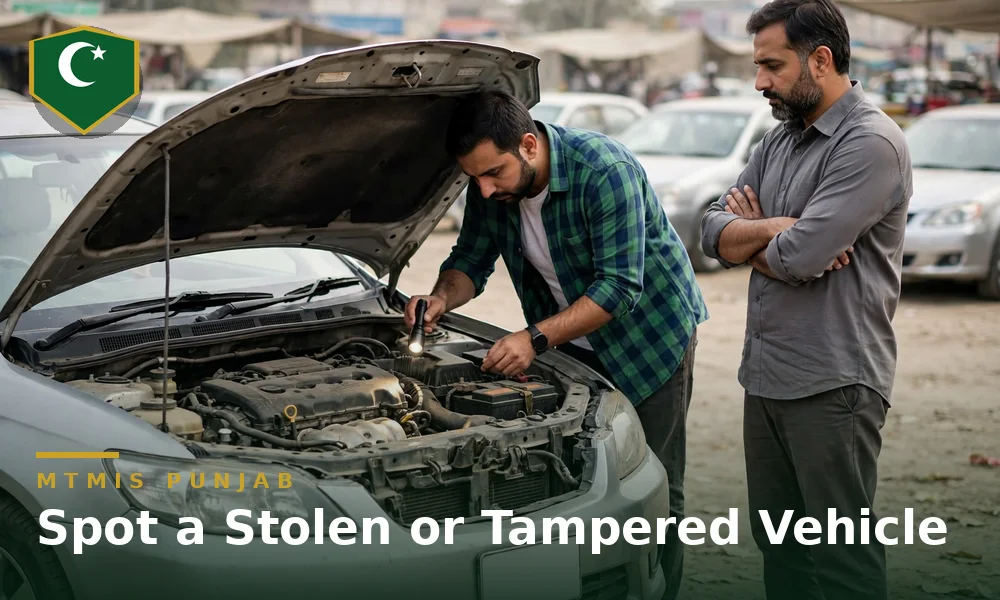
How to spot a stolen, non-custom-paid or tampered vehicle before buying
A stolen vehicle, a non-custom-paid vehicle and a tampered vehicle share one sales method: the seller prices the vehicle below the market, presses the buyer for a fast decision, and keeps the paperwork conversation short. The buyer who runs a fixed check stack defeats that method, because each check attacks a different layer of the fraud. The Excise record tests the registration, the police service tests the theft status, the physical inspection tests the stamped numbers, and the document review tests the import history. No single check clears a vehicle, and no clean result on one layer excuses a failure on another. This guide runs the stack in order and closes with the golden rules that govern every used vehicle purchase in Punjab. The record layer of the stack builds on MTMIS Punjab: the complete guide to online vehicle verification.
Table of contents
- Check 1: match the MTMIS online record against the seller
- Check 2: cross-check by SMS on 8785 and 8521
- Check 3: the stolen vehicle angle and police confirmation
- Check 4: the non-custom-paid trap
- Check 5: read the stamped numbers for tampering
- The golden rules before any payment
- Frequently asked questions
Check 1: match the MTMIS online record against the seller
The buyer opens the official portal at mtmis.excise.punjab.gov.pk and enters the registration number, the registration date and the security code. The buyer then matches the result against the seller and the vehicle, field by field:
- Owner name against the seller CNIC. The name on the result must match the name on the original Computerized National Identity Card (CNIC) of the person selling the vehicle. A seller who is not the recorded owner must produce a complete and verifiable transfer chain.
- Make, model and year against the vehicle. The record description must match the vehicle in front of the buyer, including the model year.
- Engine number against the engine block. The result displays the engine number, and the buyer reads the number on the block and compares both digit by digit.
- Token tax status. The result shows the payment position, and unpaid dues transfer to the buyer with the vehicle.
One limit of the online result decides the next step: the result does not display the chassis number. The buyer then matches the chassis number physically, reading the stamping on the vehicle and comparing the stamping against the number on the registration book or smart card. A buyer who skips the physical chassis match has verified the registration plate, not the vehicle under the plate. The full record routine sits inside the used vehicle buying checklist: 12 checks before you pay in Punjab, and a search that returns no record at all follows the causes and fixes in MTMIS shows no record found.
Check 2: cross-check by SMS on 8785 and 8521
Two SMS services cross-check the portal result, and the buyer runs both from a personal phone so the replies stay in buyer hands. The Excise service on 8785 returns the vehicle record by text against the registration number, and the buyer compares the reply against the portal result for any difference in owner, make or engine number. The Punjab Police Stolen Vehicles Identification System (SVIS) on 8521 tests the theft status: the buyer sends the chassis number in the format CNO followed by the chassis number to 8521, and the reply states the status of the vehicle, including a stolen or recovered entry where the database carries one. The buyer reads the chassis number off the vehicle stamping for the message, never off a paper the seller hands over, because a message built on seller numbers tests the seller story rather than the vehicle. A difference between any two replies stops the purchase until the Excise office or the police resolves the difference.
Check 3: the stolen vehicle angle and police confirmation
A clean Excise record proves a registration exists; the record alone never proves the vehicle in front of the buyer is the vehicle behind that registration. A thief clones a clean registration onto a stolen vehicle of the same make and color, and only the number and document checks expose the clone. The buyer treats three situations as stop signals. First, any mismatch between the record, the documents and the stamped numbers stops the deal on the spot. Second, a seller who refuses the portal check, the SMS checks or a police confirmation ends the negotiation, because an honest seller gains from every check. Third, a price far below the market for the model and year demands an explanation in documents, not in words. The buyer raises a doubtful case with the local police on the helpline 15 or at the police station, and asks the registering authority to confirm the record where the file history looks thin. Suspicion is not proof, and the buyer accuses no one at the roadside: the Excise record and the police confirmation govern the final decision, and the buyer simply walks away from any vehicle that fails to reach that confirmation.
Check 4: the non-custom-paid trap
A non-custom-paid (NCP) vehicle entered Pakistan without payment of customs duty. Smugglers bring such vehicles across the border outside the customs channels, and certain auction and border-area routes place further NCP stock into informal circulation. The legal position admits no cure: an NCP vehicle holds no lawful import record, the Excise department cannot register the vehicle in Punjab, and Customs can seize the vehicle wherever an officer finds it, regardless of the hands that hold it at the time. A buyer who pays for an NCP vehicle buys a seizure risk with no registration future, and a later sale passes the same risk along without removing it.
The paperwork smell tests expose most NCP offerings before any office visit:
- No bill of entry. A lawfully imported vehicle carries a customs bill of entry in its file history. A file with no import document at the root carries a burden the seller must explain with papers.
- No Excise record. The portal returns no record for the registration number, or the number belongs to a different vehicle.
- Plates from another regime. The vehicle wears plates of a tribal area, a foreign mission or another province with a story that changes between tellings.
- A book with no file behind it. The seller presents a registration book but resists any visit to the registering office, where the file check would settle the question in minutes.
Check 5: read the stamped numbers for tampering
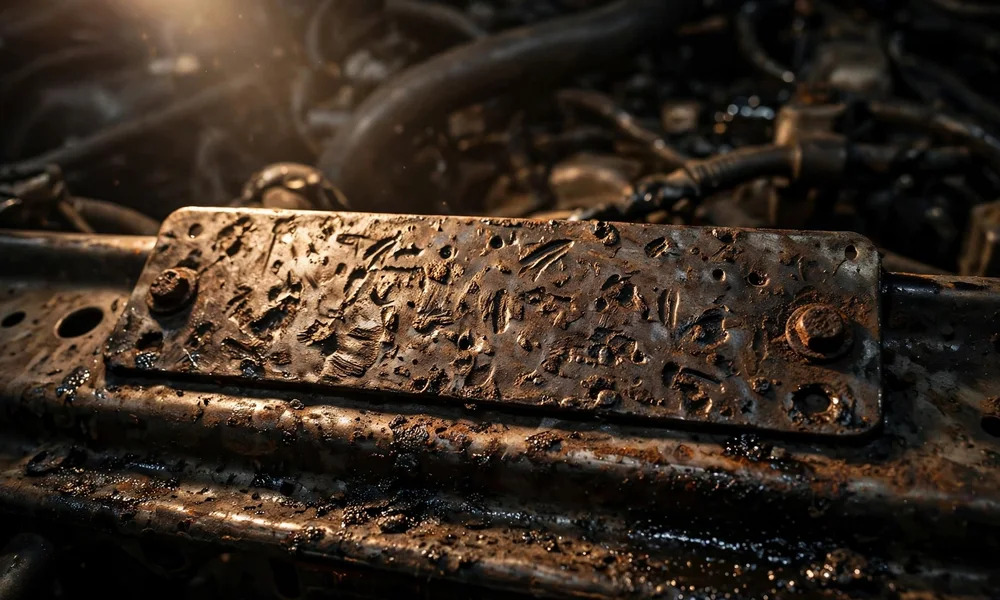
The engine and chassis stampings carry the identity of the vehicle, and tampering attacks exactly those stampings. The buyer inspects both numbers in daylight, with the metal cleaned, against the numbers on the registration document:
- Character font and size. Factory stampings hold one font, one depth and one spacing across the full number. A restamped number often mixes character shapes or sizes.
- Alignment. Factory characters sit on one line with even gaps. Characters that climb, dip or crowd point to hand work after the factory pass.
- Surface marks. Grinding leaves flat patches, swirl marks or fresh paint around the stamping area, because the original number must disappear before a new number takes its place.
- Welded plates and patches. A chassis plate with fresh weld beads, uneven rivets or a replaced section signals a plate moved from another vehicle.
- Corrosion pattern. Original stampings age with the surrounding metal. Bright, sharp characters on an aged and rusted surface deserve a question the seller answers with documents.
The buyer photographs both stampings during the inspection. A seller who blocks the photography or rushes the inspection of the numbers ends the negotiation under the same rule as a seller who refuses the record checks.

The golden rules before any payment
The check stack condenses into six rules that govern every purchase:
- Verify the record on the portal before any discussion of price.
- Match the owner name on the record against the original CNIC of the seller.
- Read the engine and chassis numbers off the vehicle, never off seller papers alone.
- Run the SMS cross-checks on 8785 and 8521 from a personal phone.
- Pay nothing, not even a token amount, before every check clears.
- Walk away from any seller who refuses a check, rushes the inspection or explains a mismatch with a story instead of a document.
Frequently asked questions
Does the MTMIS online result show the chassis number?
No. The result displays the engine number, and the result withholds the chassis number. The buyer matches the chassis number physically on the vehicle against the number on the registration book or smart card.
Does a clean MTMIS record prove the vehicle is not stolen?
No. The record proves that a registration exists and states the particulars of that registration. The theft status requires the police layer of the stack: the SVIS message to 8521 and, in a doubtful case, confirmation from the local police or the registering authority.
Can a non-custom-paid vehicle be registered in Punjab later?
No. An NCP vehicle holds no lawful import record, and the Excise department cannot register the vehicle in Punjab. Customs can seize an NCP vehicle in any hands, so no later payment by a buyer cures the defect.
What should the buyer do when one field mismatches?
The buyer stops the purchase. A mismatch between the record, the documents and the stamped numbers stands unresolved until the Excise office or the police confirms the position, and the buyer pays nothing while the mismatch stands.
Why does the seller identity matter when the record is clean?
The transfer starts from the recorded owner. A seller outside the record must show a complete transfer chain to the recorded owner, and a break in that chain leaves the buyer with a vehicle the buyer cannot transfer into a new name.