Lahore AI traffic signal project faces funding shortfall The Traffic Engineering and Planning Agency has asked the Punjab government to release more than Rs580 million to complete the installation of
Lahore AI traffic signal project faces funding shortfall
The Traffic Engineering and Planning Agency has asked the Punjab government to release more than Rs580 million to complete the installation of AI-based vehicle video detection traffic signals across Lahore. The project received only Rs10 million in the current fiscal year, and the agency has warned that the remaining work cannot finish on time without the full amount.
What happened
The Traffic Engineering and Planning Agency, known as TEPA, sent a summary to the Punjab Housing Department requesting the release of the funds. The project was approved at a cost of more than Rs590 million, and its pilot phase has already been completed successfully. According to the summary, around 30 percent of the total work, including the pilot, has been completed so far.
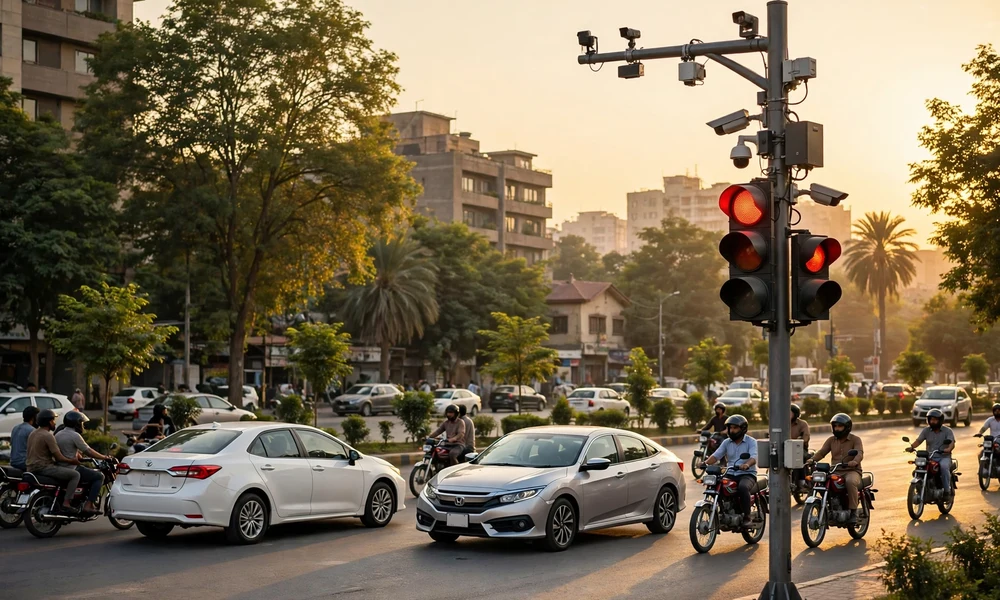
TEPA has installed modern pelican signals at several locations, including Adda Plot and Jati Umra Chowk. At the remaining sites, signals will be set up under the automated vehicle video detection system. The agency has urged the government to release the full amount within the current fiscal year so that the project can be completed on time and traffic flow in the city can be improved through AI-enabled signals.
The project aims to modernise traffic management at 20 busy intersections across Lahore. The new system uses cameras and sensors to monitor traffic in real time and adjust signal timings according to the flow of vehicles, instead of running on fixed timers. The signals will be linked to the Punjab Safe Cities Authority and the traffic police for central monitoring. A pilot project on Mall Road tested the system before the wider rollout began, and the plan also includes pelican crossings that pedestrians can activate at the push of a button.
What it means for vehicle owners
For drivers in Lahore, the funding gap means the wait for smarter signals will continue. Fixed timers keep traffic moving at the same pace whether a road is empty or jammed, while a video detection system shortens red lights on empty approaches and gives more green time to the busier direction. Until the remaining intersections are covered, drivers will keep facing the same queues at the busiest crossings in the city.
The project also connects directly with the enforcement system that drivers already deal with every day. The same camera network that watches traffic flow feeds the Punjab Safe Cities Authority system, which issues e-challans for signal violations, speeding and other offences. Smarter signals should reduce the stop-start congestion that pushes drivers into risky moves, but they will not change the fines for breaking a red light. Drivers should continue to treat every signal as enforced, because the cameras record violations whether the signal is new or old.
Vehicle owners should also note that the pelican crossings already installed at Adda Plot and Jati Umra Chowk change the rules at those spots. A pedestrian-activated signal means the light can turn red for traffic at times when drivers do not expect it, so slowing down near marked crossings is now more important than before. Failing to stop at a pedestrian signal carries the same penalty as any other signal violation, and the fine is recorded against the vehicle.
The funding request itself is a reminder that large traffic projects in Lahore depend on releases within the same fiscal year. If the Punjab government releases the requested amount, TEPA expects to finish the remaining 70 percent of the work within the current year. If the release is delayed, the rollout will stretch further, and the 20-intersection plan will remain only partly complete.
Drivers who want to stay clear of fines while the system expands should check their challan record regularly. Owners can verify a vehicle record through the MTMIS Punjab vehicle verification guide and check and pay any pending fine through the e-challan guide.
Key points
- TEPA has asked the Punjab government to release more than Rs580 million to complete the AI-based traffic signal project in Lahore.
- The project received only Rs10 million in the current fiscal year, against an approved cost of more than Rs590 million.
- Around 30 percent of the work, including the pilot phase, has been completed.
- Modern pelican signals have been installed at Adda Plot and Jati Umra Chowk, among other locations.
- The project covers 20 busy intersections, with cameras and sensors adjusting signal timings in real time.
- The new signals will be linked to the Punjab Safe Cities Authority and the traffic police for central monitoring.
- TEPA has asked for the full amount within the current fiscal year so the project can finish on time.
Sources: TechJuice, October 30, 2026, reporting the funding request, the Rs580 million figure, the Rs10 million received, the 30 percent completion figure and the pelican signal installations at Adda Plot and Jati Umra Chowk; PakWheels, December 17, 2025, reporting the 20-intersection plan, the video vehicle detection system, the link to the Punjab Safe Cities Authority and the traffic police, and the successful Mall Road pilot.