Open letters and stuck transfers: why Punjab vehicle transfers fail
An open transfer letter is a signed transfer paper that a seller hands to a buyer without a completed change of ownership in the Excise record. The Punjab Excise and Taxation Department treats driving on an open letter as illegal, and biometric verification of buyer and seller has stood mandatory for transfer since March 2020. A vehicle on an open letter stays registered in the name of the previous owner, and every official consequence of the vehicle lands on that name. This guide states what an open letter is, why transfers built on open letters fail, what the arrangement costs each side, and the biometric route that completes a stuck transfer.
Table of contents
- What an open transfer letter is and what it is not
- The legal position on open letters in Punjab
- Why a stuck transfer fails: the five blocking points
- What an open letter costs the seller
- What an open letter costs the buyer
- How to complete a stuck transfer through the biometric route
- Frequently asked questions
What an open transfer letter is and what it is not
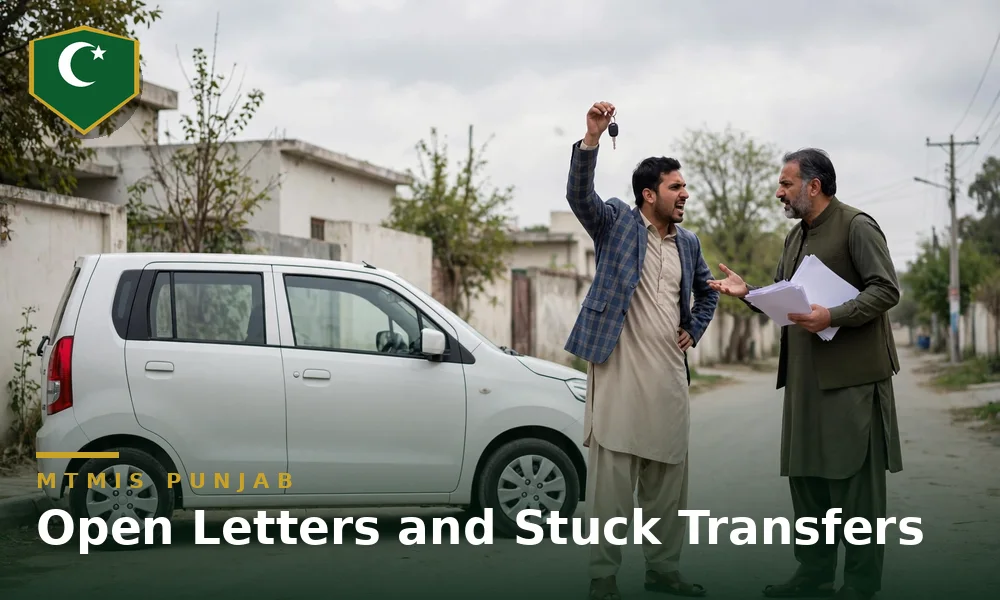
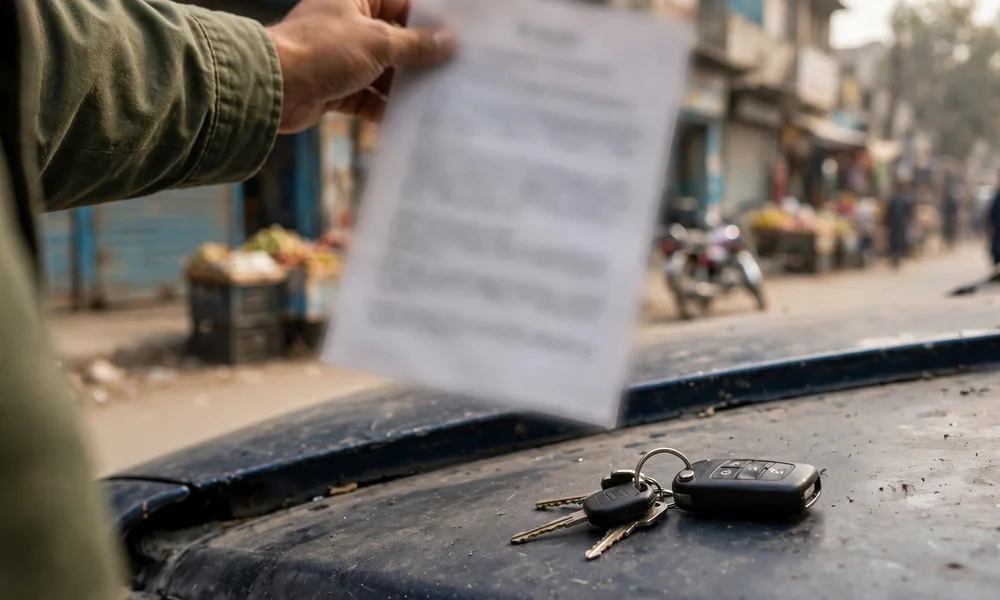
An open letter sale transfers the vehicle, the keys and a set of signed papers. The seller signs the transfer documents and leaves the buyer field open, and the buyer drives the vehicle without applying for a change of ownership. The Excise record shows no change at all. The Motor Registration Authority record continues to name the seller as the owner, and the registration book and smart card continue to carry the seller name.
The practice often runs in chains. A second buyer purchases the vehicle from the first buyer against the same open papers, and a third purchase repeats the pattern. Each unrecorded sale adds one more gap between the person who holds the vehicle and the person the record names. The gap is the point of failure for every later transfer, because the record names a person who may stand two or three sales away from the current holder. A signed letter documents a private bargain between two people. The letter does not amend a government record, and no counter in Punjab accepts a letter as a substitute for a recorded transfer.
The legal position on open letters in Punjab
The Punjab Excise and Taxation Department has declared the open letter practice illegal in its public notices. PakWheels reported the department position in June 2021: a person driving a vehicle on an open transfer letter acts against the rules, and the department set a deadline for owners of such vehicles to register the vehicles in their own names before the biometric procedure became the only route. The department made biometric verification mandatory for transfer of ownership in March 2020, and both the buyer and the seller complete the biometric stage in a valid transfer.
The position rests on a simple record rule. The registered owner carries legal responsibility for the vehicle at all times. Challans issued against the vehicle go to the registered owner. A vehicle used in a criminal matter leads the authorities to the registered owner. The department notices name the same two grounds in each drive against open letters: the security exposure of the recorded owner and the fraud space that an unrecorded chain creates. An open letter is not a recognised shortcut with a paperwork risk attached. The open letter is an uncompleted transfer, and the law treats the sale as unfinished until the record changes.
Why a stuck transfer fails: the five blocking points
A stuck transfer fails at a small set of repeating points. The list below states the five points in the order a case usually meets them.
- The recorded owner stands absent from the biometric stage. The seller on the record never appears, and the biometric verification of the recorded owner cannot take place.
- The sale chain runs through open letters. The current holder bought from an intermediary, and the recorded owner has no direct bargain with the current holder at all.
- Arrears stand against the vehicle. Unpaid token tax and unpaid e-challans attach to the vehicle record, and the counter does not process a transfer over open dues.
- The record details mismatch the documents. A name spelling, a CNIC number or an engine or chassis entry differs between the file and the papers in hand, and the application stops for correction.
- The registration stands suspended or disputed. A suspended record blocks counter processing until the suspension clears.
Each blocking point has the same signature. The application exists, the vehicle exists, and the record cannot move because one input is missing. The missing input in most stuck cases is the recorded owner, because the open letter chain separated the holder from the owner years before the transfer attempt.
How to transfer vehicle ownership in Punjab states the standard transfer sequence for a clean case, with the documents and fees in order.
What an open letter costs the seller
The seller carries the heavier side of an open letter. The record keeps the seller name, and the systems that read the record act on that name. Safe City and traffic police challans against the vehicle arrive in the name of the seller. Token tax arrears accrue against the record of the seller. A police inquiry after an incident starts with the seller. The seller holds a private letter as the only proof of the sale, and the letter persuades no system that reads the Excise database.
The department gives a recorded seller one protective step. Dawn reported the department advice in August 2025: a seller whose buyer has not transferred the vehicle should inform the Excise helpline 1035 so the department suspends the registration and the seller avoids later inconvenience. Suspension protects the seller position. Suspension does not complete the transfer, and the buyer then faces a blocked record until both sides complete the formal route.
What an open letter costs the buyer
The buyer holds a vehicle without legal ownership. The buyer cannot prove title from the record, because the record names another person. A later resale repeats the problem at a worse position, because the next buyer runs a verification check and finds an owner who is not the person selling. Insurance and financing channels read the same record and raise the same mismatch. The buyer also inherits the open dues position of the vehicle, because token tax arrears and challans attach to the vehicle record rather than to the person who drove the vehicle in that period.
A verification check exposes the position in under a minute. The official portal at mtmis.excise.punjab.gov.pk asks for the registration number, the registration date and the security code. The result shows the owner name and the engine number, and the result shows no chassis number. A buyer who runs the check before payment sees the recorded owner name on the screen and compares the name against the CNIC of the person taking the money. A mismatch between the two names is the open letter warning sign.
How to complete a stuck transfer through the biometric route
The biometric route completes a stuck transfer, and the route starts with the recorded owner. The steps below state the working order.
- Run the verification check on the official portal and confirm the recorded owner name and the dues position of the vehicle.
- Trace and contact the recorded owner. The recorded owner is the only seller the system recognises for the biometric stage.
- Clear the arrears against the vehicle, including token tax dues and unpaid e-challans, so the counter accepts the application.
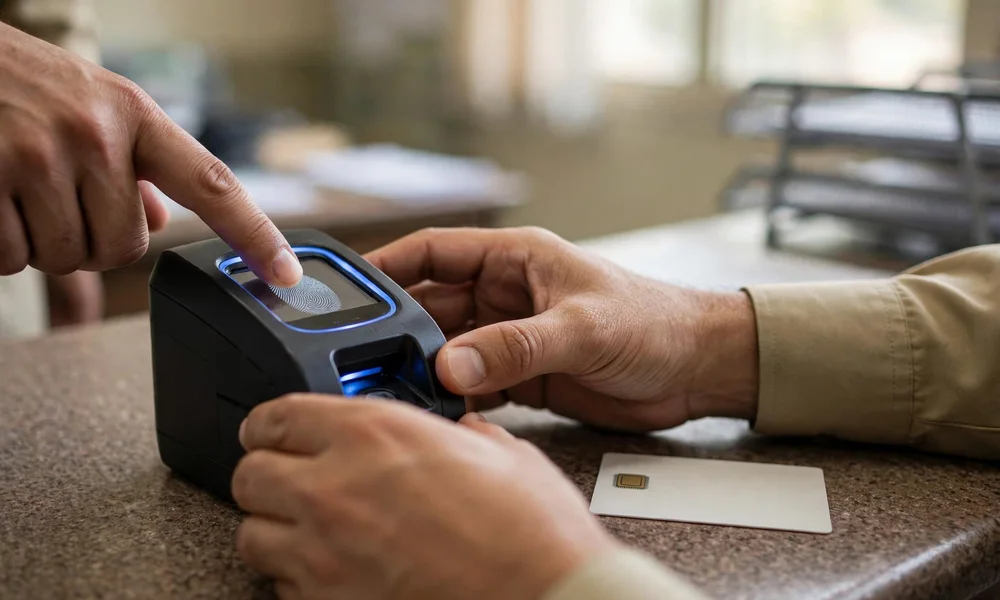
- Complete biometric verification for the recorded seller and the buyer. The Pak ID route allows both sides to complete the biometric stage before the office visit in covered cases.
- Submit the transfer application with the registration book or smart card, the CNIC copies and the sale documents at the Motor Registration Authority.
- Pay the Excise transfer fee and the federal advance tax for the transfer.
- Recheck the record on the official portal after processing and confirm the buyer name on the result.
Older department drives carried temporary hardship windows for owners who could not trace a seller, and those windows closed at the end of each drive. A buyer should not plan around a hardship exemption as a standing route. A case with an untraceable recorded owner goes to the Motor Registration Authority counter for the current department position, and the helpline 1035 gives the starting direction.
Biometric vehicle transfer with the Pak ID app explains the biometric stage in full, including the order in which buyer and seller complete verification.
MTMIS Punjab: the complete guide to online vehicle verification covers the verification result field by field, including the engine number display and the absence of the chassis number.
Frequently asked questions
Is an open transfer letter a valid way to buy a vehicle in Punjab?
No. The Punjab Excise and Taxation Department treats driving on an open transfer letter as illegal. The letter records a private bargain, and the Excise record continues to name the seller until a formal transfer with biometric verification changes the record.
Can a buyer complete a transfer without the recorded seller?
No. Biometric verification of the recorded seller is a mandatory stage of the transfer, and the system recognises no substitute signature. A buyer in an open letter chain must trace the recorded owner and bring that person into the process.
Do challans really go to the previous owner?
Yes. Challans and token tax arrears attach to the vehicle record, and the record names the previous owner until a transfer completes. The department advises a seller in that position to call the helpline 1035 and ask for suspension of the registration.
Does a signed sale agreement protect the buyer?
No. A sale agreement proves a private bargain between the signatories. The agreement does not change the registered owner, and official systems continue to act on the name in the Excise record.
Does the hardship exemption still complete a transfer without a seller?
No standing exemption applies. Temporary hardship windows appeared inside older department drives and closed with those drives. A buyer with an untraceable recorded owner takes the case to the Motor Registration Authority for the current position.
How does a buyer detect an open letter vehicle before paying?
The buyer runs the official verification check with the registration number, the registration date and the security code. The result shows the recorded owner name. A name on the result that differs from the CNIC of the person selling the vehicle marks an open letter case.