How to change an engine number on a Punjab registration record
An owner changes the engine number on a Punjab registration record through the Motor Registration Authority (MRA) of the registering district, and the department treats the change as an alteration in a motor vehicle. The owner files Form F with the new engine number, the purchase receipt of the new engine, a CNIC copy and the original registration certificate with token tax paid. The official schedule sets the alteration fee at Rs 1,500 for a private vehicle and Rs 3,000 for a transport vehicle. This guide states why the record must match the engine, the documents the department lists, the endorsement sequence and the checks after the update.
Table of contents
- An engine change is an alteration on the record
- Why the record must match the engine in the vehicle
- Documents the department lists for an engine change
- The endorsement sequence, step by step
- Fees on the official schedule
- An engine of a different capacity
- After the update: the record and the smart card
- Frequently asked questions
An engine change is an alteration on the record
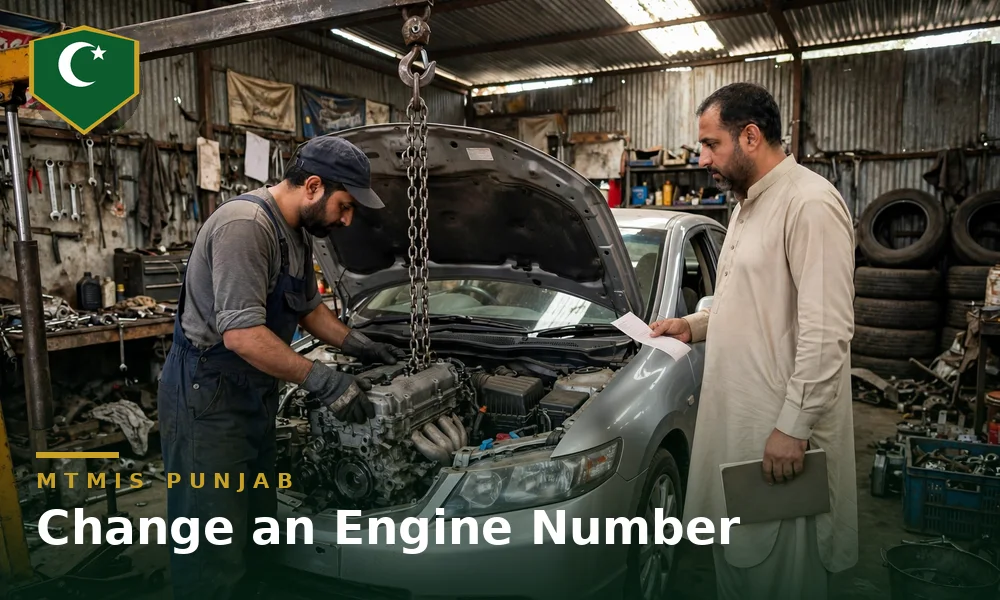
The registration record carries the engine number of the vehicle as a core identity field. The Excise, Taxation and Narcotics Control Department records the number at registration, and the number stays fixed until the owner replaces the engine. A replacement engine carries a different number, and the record then describes an engine the vehicle no longer holds. The department closes the gap through a post-registration transaction named alteration, and a change of engine number stands in the department list of alteration cases.
The alteration is a record endorsement, not a new registration. The registration number, the ownership position and the file of the vehicle stay in place. The MRA amends the engine field on the file, and the amended record then flows to the verification portal and the smart card. An owner who skips the endorsement holds a vehicle and a record in open disagreement, and the disagreement surfaces at the worst points: a transfer inspection, a police check or a buyer verification.
Why the record must match the engine in the vehicle
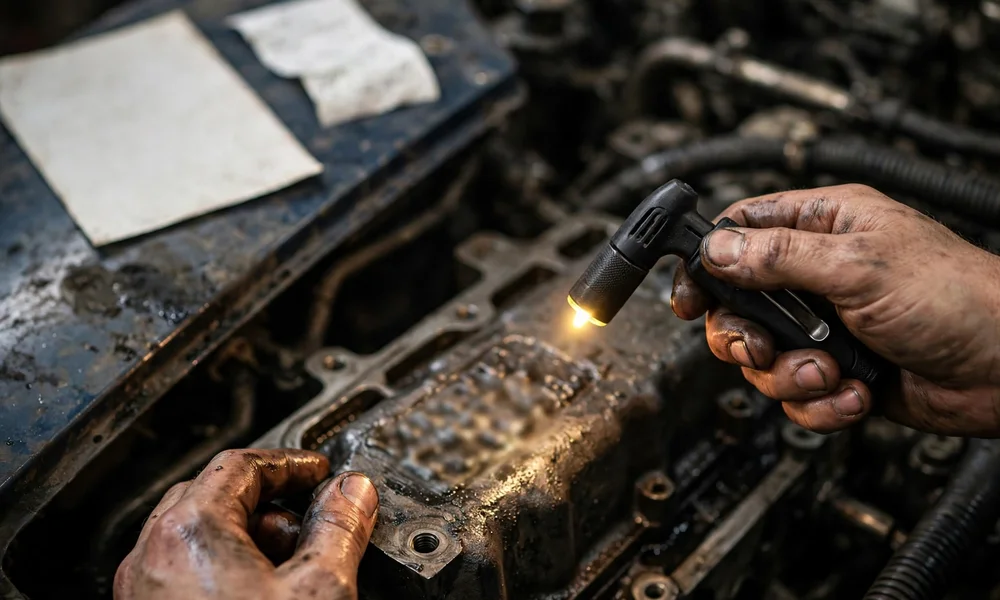
The verification result shows the engine number. A buyer, an officer or an insurer reads the number on the portal and compares the number with the stamping on the engine block. A match closes the check in seconds. A mismatch opens a suspicion of a swapped or stolen engine, and the vehicle carries that suspicion until the record stands corrected. The online result shows no chassis number, and the engine number is the one identity field the public record exposes, so the accuracy of the engine field carries the full weight of the public check.
A pending transfer raises the stakes further. The transfer process matches the vehicle against the record, and an unrecorded engine change stops the case at the counter. An owner records the alteration before any sale, because a correction inside a transfer case costs more time than a correction on a standing record. The receipt discipline in the next section decides how fast the case moves.
Documents the department lists for an engine change
The department document list for a change of engine number names four items, with a fifth item for one class of older vehicles. The table below states the list as the department publishes the list.
| Document | Point the document settles |
|---|---|
| Receipt regarding purchase of the new engine | The engine came from a lawful sale, and the receipt names the engine number |
| Form F with the particulars of the vehicle, including the new engine number | The owner declares the new number on the registration form of the vehicle |
| Photocopy of the CNIC of the applicant | The applicant matches the registered owner on the record |
| Original registration certificate with token tax paid up to date | The record stands current, and no arrears block the transaction |
| Original registration file | Applies to vehicles registered under the File Return Scheme alone |
The purchase receipt carries the case. An engine without a receipt has no proven origin, and the department treats an unproven engine as a risk the record cannot absorb. A buyer of a replacement engine takes a receipt that states the engine number, the date and the seller identity, and the buyer holds the receipt with the vehicle papers after the endorsement. Token tax arrears stop the transaction at the counter, so the owner clears the dues position and holds the payment proof before the visit.
How to register a new vehicle in Punjab states the Form F discipline at first registration, and the same form carries the particulars for the alteration case.
The endorsement sequence, step by step
The owner completes the alteration at the MRA of the registering district in a fixed order.
- Buy the replacement engine against a written receipt that names the engine number.
- Clear the token tax position of the vehicle and hold the payment proof.
- Complete Form F with the particulars of the vehicle and the new engine number exactly as stamped.
- Assemble the receipt, the Form F, the CNIC copy and the original registration certificate.
- Submit the set at the MRA counter and pay the alteration fee against a challan or a PSID.
- Present the vehicle where the authority requires a physical reading of the engine stamping.
- Collect the endorsed certificate and read the updated record on the verification portal.
The physical reading protects both sides of the counter. The authority matches the stamping on the block against the Form F entry and the receipt, and a difference in a single character returns the file for correction. An owner reads the Form F entry against the stamping before submission, character by character, because the portal later prints exactly the characters the file carries.
Fees on the official schedule
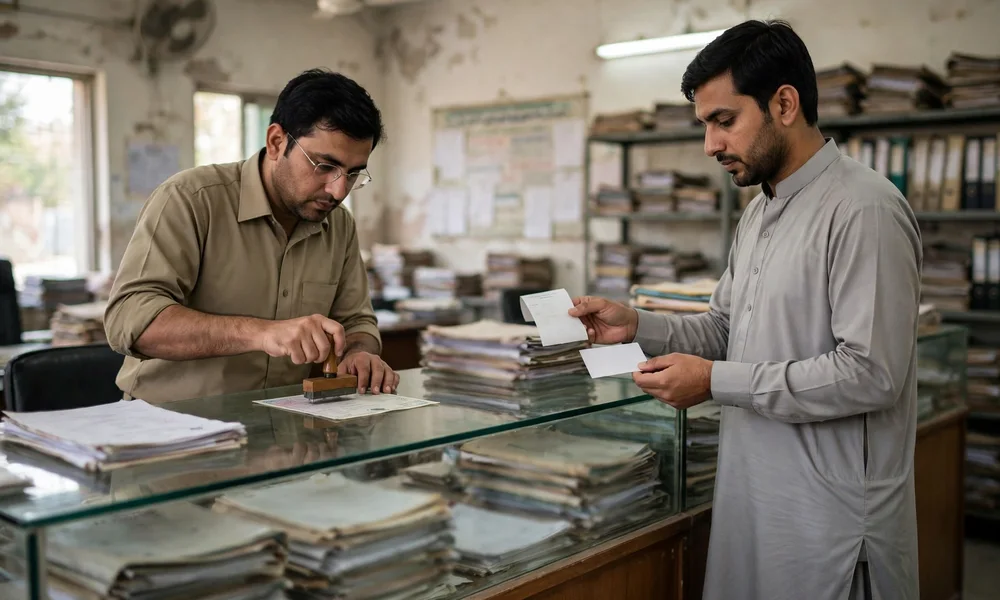
The official fee schedule on the department motor vehicle tax page sets the alteration fee in the post-transaction table. The table below states the figures as the schedule publishes the figures.
| Head | Fee on the official schedule |
|---|---|
| Alteration in a motor vehicle, transport vehicle | Rs 3,000 |
| Alteration in a motor vehicle, other vehicles | Rs 1,500 |
| Smart card, motorcycle, car, HTV and rickshaw | Rs 1,300 |
The owner pays the alteration fee for the endorsement, and a replacement smart card after the endorsement carries the standard smart card fee of Rs 1,300. No other endorsement figure applies to the engine change case itself. An owner reads every challan line against the schedule before payment, and a line outside the schedule requires an explanation at the counter.
An engine of a different capacity
A replacement engine sometimes carries a different capacity from the original engine. The capacity field on the record then changes with the number field, and the change reaches the tax position of the vehicle. Token tax bands on the official schedule run by engine capacity, and a vehicle that crosses a band boundary carries the dues of the new band. Withholding tax positions at registration and transfer also run by capacity bands on the schedule.
The counter settles the dues position on the new capacity during the alteration case. An owner with a capacity change asks the counter for the revised dues reading before payment and holds the reading with the endorsed papers. The verification record shows the updated particulars after the endorsement, and the owner confirms the capacity entry beside the engine number entry on the portal result.
MTMIS Punjab: the complete guide to online vehicle verification explains each field of the result, including the engine number field the alteration corrects.
After the update: the record and the smart card
The endorsed record updates the central database, and the verification portal then shows the new engine number against the registration number. The owner runs the check with the registration number, the registration date and the security code, and the owner compares the result against the stamping on the block one final time. The smart card in the vehicle still prints the old number until a replacement card arrives, so the owner holds the endorsed certificate and the fee receipt with the vehicle papers during the interval.
A replacement card follows the standard card route after the endorsement. The card fee stands at Rs 1,300 on the official schedule, and the delivery timeline of cards runs in weeks rather than days. An owner who plans a sale completes the endorsement and the card replacement before the sale, because a buyer reads the card and the portal together and a difference between the two documents reopens the suspicion the alteration closed.
Vehicle registration smart card in Punjab explains the card, the record data the card carries and the delivery route after an application.
Frequently asked questions
Does an engine change need a new registration?
No. An engine change is an alteration endorsement on the existing record. The registration number, the ownership position and the file stay in place, and the MRA amends the engine field alone.
Which document carries the engine change case?
The purchase receipt of the new engine carries the case. The receipt proves the lawful origin of the engine, and the department list names the receipt first among the documents for a change of engine number.
Does the verification result show the new engine number after the endorsement?
Yes. The portal result shows the engine number from the central record, and the endorsed record carries the new number. The owner confirms the update on the portal with the registration number, the registration date and the security code.
Does the alteration change the chassis number on the record?
No. The chassis number stays untouched in an engine alteration, and the public verification result shows no chassis number in any case. The endorsement amends the engine field and, where the replacement differs, the capacity field.
Can the owner complete the alteration in a district other than the registering district?
No. The file of the vehicle sits with the MRA of the registering district, and the alteration runs on that file. An owner reads the record and pays dues online from any district, and the owner files the alteration where the file sits.
Does a replacement smart card cost extra after the endorsement?
Yes. A replacement smart card carries the standard smart card fee of Rs 1,300 on the official schedule, separate from the alteration fee of Rs 1,500 for a private vehicle or Rs 3,000 for a transport vehicle.