Excise at your doorstep: home registration and transfer in Punjab
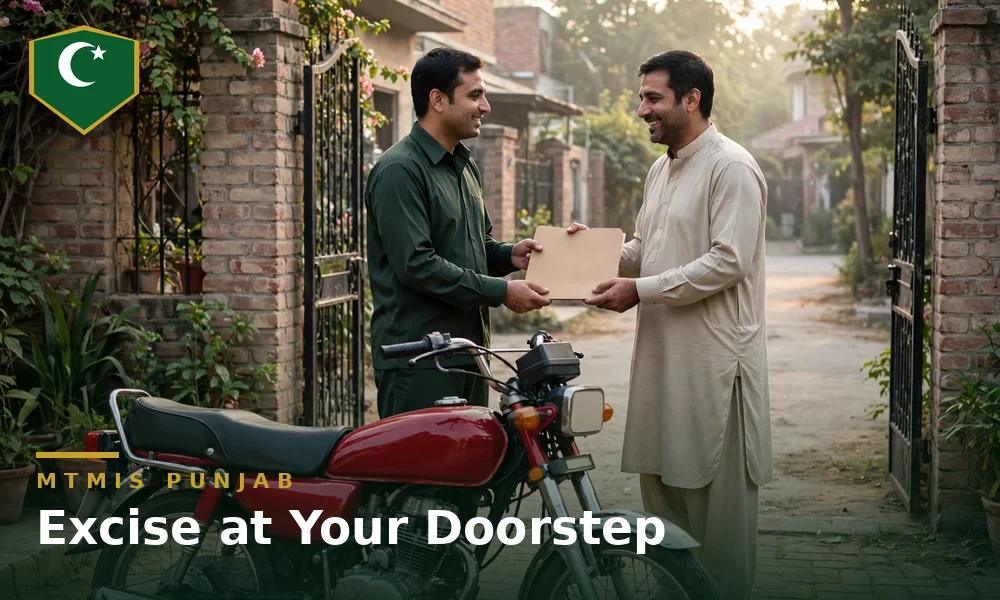
The Excise doorstep service in Punjab sends a department rider to the home of an applicant for vehicle registration and transfer work. The Punjab Excise and Taxation Department launched the service under the name Excise at Your Doorstep with booking through the Dahleez App and the Punjab Information Technology Board (PITB) helpline 0800-08786. Launch reporting places the service in Lahore as the starting city, and the department announced expansion across the province as a plan. This guide states the booking route, the home visit, the dues position and the coverage position on the record that supports each point.
Table of contents
- What the doorstep service is
- The coverage position, stated on the record
- How booking works
- What happens at the home visit
- Dues and documents under the doorstep route
- The doorstep service and the Dastak programme
- Doorstep, counter and online routes compared
- Frequently asked questions
What the doorstep service is
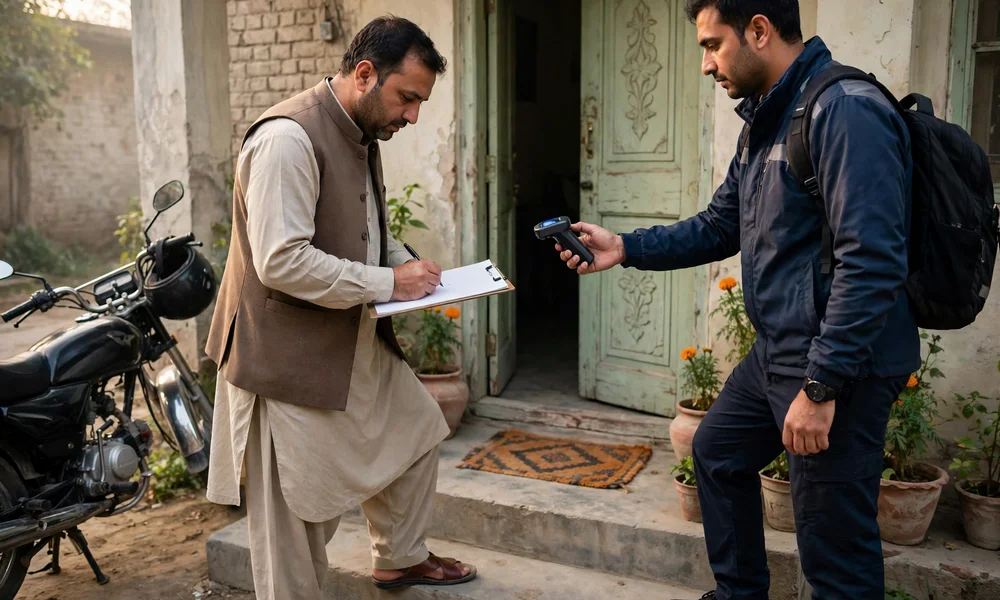
Excise at Your Doorstep is a home-visit service of the Excise, Taxation and Narcotics Control Department for vehicle registration and transfer of ownership. An applicant books a visit, and a department rider attends the home at the appointed time with the service kit. The rider collects the documents, takes the biometric verification, generates the Payment Slip ID (PSID) for the dues and completes the application on the spot. Launch reporting describes on-spot allocation of the registration number for covered cases, with the registration documents dispatched to the applicant through Pakistan Post.
The service moves the counter to the applicant. The record work stays identical to the office route: the same department record, the same dues schedule and the same file discipline apply at the home visit. The doorstep route changes the place of the transaction, and the route changes no rate, no document requirement and no record rule. An applicant with a file problem, for example a record correction or an endorsement case, still belongs at the Motor Registration Authority (MRA) counter, because the rider carries the registration and transfer services of the launch design.
The coverage position, stated on the record
Launch reporting from the service introduction places the doorstep service in Lahore. The department presented Lahore as the starting city, and reports of the launch describe expansion to the rest of Punjab as the announced direction of the programme. No official notice in the sources for this guide confirms a completed province-wide rollout of the Excise rider service, and this guide claims no such rollout. A reader outside Lahore treats the service as unconfirmed in that district until the booking channel confirms a visit.
The confirmation route is short. The PITB helpline 0800-08786 carries the booking and the coverage answer in one call: the applicant names the district and the service, and the helpline confirms whether a rider visit stands available for that district at that time. The Dahleez App booking flow gives the same answer to an applicant who books through the app. An applicant books nothing and pays nothing on the word of an agent, because agent claims about doorstep coverage carry no department authority.
How booking works
The applicant books the visit through one of the two launch channels, and the booking fixes the date, time window and address of the visit.
- Call the PITB helpline 0800-08786 or open the Dahleez App booking route.
- State the service required: new registration or transfer of ownership.
- Give the applicant CNIC details, the vehicle particulars and the home address for the visit.
- Receive the appointment confirmation with the visit window.
- Assemble the documents for the service before the rider arrives.
- Hold a payment route for the dues, through the PSID the rider generates at the visit.
The confirmation carries the reference of the booking, and the applicant holds the confirmation until the visit closes. An applicant who misses the window rebooks through the same channel, because the rider route runs on booked windows alone. The applicant keeps the registered owner available at the visit, because the biometric step binds the transaction to the owner and, in a transfer, to the seller and the buyer as the transfer rules require.
How to register a new vehicle in Punjab states the office registration sequence and the document set that the doorstep visit mirrors at home.
What happens at the home visit
The rider completes the transaction in a fixed order at the home of the applicant. The rider checks the documents of the case against the service requirement. The rider takes the biometric verification of the parties at the visit. The rider enters the application, generates the PSID for the dues and takes the payment through the payment route of the applicant. Launch reporting describes allocation of the registration number on the spot for a covered new registration, and dispatch of the registration documents to the address of the applicant through Pakistan Post after the visit.
Two case types leave the home route in the launch reporting. Imported vehicles and auction vehicles can require the file to return to the office for processing, because the file work of those classes sits with the office record rather than with the rider kit. The rider states the position at the visit where the case falls in such a class, and the applicant then follows the office completion for that part of the case. The smart card follows the standard delivery route after registration in every case, and the card arrives by post rather than at the doorstep visit.
Dues and documents under the doorstep route
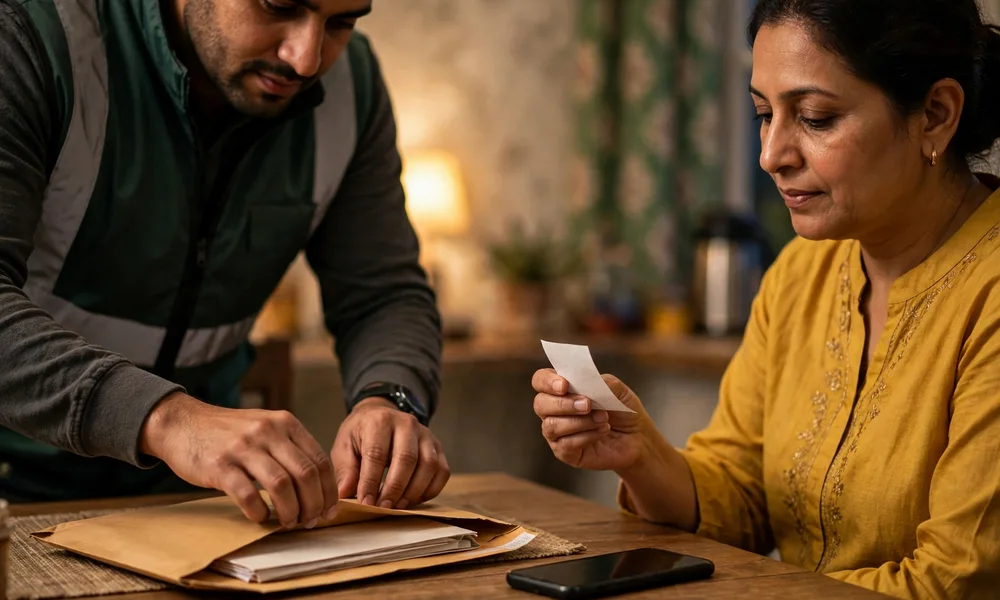
The dues under the doorstep route follow the standard official schedule, and the doorstep route adds no rate of its own in the sources for this guide. The applicant pays the registration fee or the transfer fee of the case, the token tax position and the smart card fee of Rs 1,300 where a card issues. No separate doorstep charge figure stands published in the launch reporting, and this guide prints no such figure. An applicant confirms the full dues reading on the PSID at the visit before payment, and a demand beyond the PSID lines requires an explanation through the helpline before any payment changes hands.
The document set mirrors the office set for the service. A new registration carries the sale documents, Form F and the CNIC of the owner. A transfer carries the registration book or smart card, the vehicle file where the case needs the file, and the CNIC copies of seller and buyer. The rider checks the set at the door, and a missing document returns the case to a rebooked visit or to the office counter.
How to transfer vehicle ownership in Punjab states the transfer document set and the biometric rule that the doorstep visit applies at home.
The doorstep service and the Dastak programme
A second programme with a similar promise runs in Punjab, and the two programmes are distinct. Maryam Ki Dastak is a general citizen-services programme of the Government of Punjab, launched in June 2024, and trained facilitators under the programme carry a list of government services to homes through the Dastak platform and its citizen application. Excise services appear in the Dastak service lists in reporting on the programme. Excise at Your Doorstep is the Excise department own rider service for registration and transfer, booked through the Dahleez App and the PITB helpline.
The distinction matters at booking. An applicant who wants the Excise rider books through the Dahleez route or the helpline and receives the department service. An applicant who books through Dastak books the Dastak facilitator route for a listed service. The applicant confirms the service, the dues and the coverage for the district on the channel the applicant uses, and no channel borrows the coverage claims of the other programme.
Doorstep, counter and online routes compared
The three routes serve different parts of the same system, and the table below states the fit of each route.
| Route | Work the route carries | Position of the applicant |
|---|---|---|
| Online portal and ePay Punjab | Verification, dues reading, PSID payment, appointment booking | Any place, no visit and no counter |
| Doorstep rider service | New registration and transfer at home, where coverage stands confirmed | The home address inside the booked window |
| MRA counter | File work: corrections, endorsements, duplicates, inspections | The office of the registering district |
An owner reads the record and pays dues online in every case. The owner books the doorstep route where the service stands confirmed for the district and the case fits the launch services. The owner takes the file cases to the counter without exception, because no home route amends the file. The verification record at mtmis.excise.punjab.gov.pk remains the closing check on every route: the owner reads the updated record with the registration number, the registration date and the security code after the transaction.
MTMIS Punjab: the complete guide to online vehicle verification explains the record check that closes a registration or a transfer on any route.
Frequently asked questions
Is the doorstep service available in every district of Punjab?
No. Launch reporting places the service in Lahore, and expansion across the province stands announced as a plan rather than confirmed as complete. An applicant confirms coverage for the district on the PITB helpline 0800-08786 before booking.
Does the doorstep route charge extra dues beyond the standard schedule?
No separate doorstep charge figure stands published in the launch reporting for the service. The applicant pays the standard dues of the case on the PSID, including the smart card fee of Rs 1,300 where a card issues, and the applicant confirms every PSID line before payment.
Does the rider complete a record correction or an endorsement at home?
No. The launch design carries new registration and transfer services. File work, for example a record correction, an engine alteration or a hire purchase termination, runs at the MRA counter of the registering district.
Does the smart card arrive at the doorstep visit?
No. The smart card follows the standard delivery route after registration and arrives by post. Launch reporting describes the registration documents as dispatched through Pakistan Post after the visit.
Can an applicant book the visit for another person?
The booking names the applicant and the vehicle, and the biometric step binds the transaction to the registered owner and, in a transfer, to the parties of the transfer. The parties attend the visit in person, because a biometric verification admits no substitute.
Is the Dastak programme the same service as Excise at Your Doorstep?
No. Maryam Ki Dastak is a general citizen-services programme with facilitators and a broad service list, and Excise at Your Doorstep is the Excise department own rider service for vehicle registration and transfer. The booking channels differ, and the applicant confirms coverage on the channel in use.